
A milestone was reached this week by the Joint European Torus (JET): the 100,000th pulse of the fusion energy experiment.

Based at the Culham Center for Fusion Energy in Oxfordshire, England, JET has a history dating back to 1975. Culham’s site was chosen in 1977 and the donut-shaped tokamak reached its first plasma in 1983 (the Queen did the official employment the following year.)
In 1991, JET conducted the world’s first deuterium-tritium experiment, and in 1997 it reached 22.5 megajoules of fusion energy (and 16 megawatts of fusion power) in a special series of deuterium-tritium experiments. In 2021 it completed a second full-power run with deuterium and tritium.
And now here we are, at 100,000 pulses. It’s quite an achievement for the experiment as it approaches the 40th anniversary of activation.
JET was recently shut down to refurbish it with concepts from the ITER design, including a new deuterium and tritium interior wall installed in 2011. mid twenties.
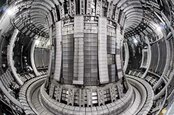
Hotter than the sun: JET – Earth’s largest fusion reactor, in Culham
READ MORE
However, the clock is ticking for JET. Notwithstanding a milestone, it will be succeeded by the much larger ITER Tokamak, which is currently under construction in the south of France and will generate its first plasma by the end of 2025.
The involvement of UK executives in the venture has been a bit uncertain, despite the preparatory work at JET for ITER. After all, the UK left the European Atomic Energy Community (Euratom) on 31 January 2020. An agreement has been reached to allow the UK to continue to participate from 1 January 2021.
Professor Ian Chapman, CEO of the UK Atomic Energy Authority, paid tribute to the experiment, saying: “JET has inspired and driven physicists and engineers around the world to build invaluable knowledge and develop groundbreaking new technology through as many as 100,000 live pulses.” before delivering what sounded a bit like a eulogy: “It is truly one of a kind, the best there has been, and will be remembered well into the future.”
Regardless of how long the 2,800-ton machine will be in use, this week’s milestone continues to pay tribute to both the design and the engineers and scientists who work with it. ®